KNOW WHAT YOU TAKE See the Formula
Evidence-Based Guide 13 Min Read

Your Gut Already Produces GLP-1. Here's How to Support It Without a Prescription.

No supplement is "nature's Ozempic." That's a marketing claim, not a mechanism. What IS real: your intestinal L-cells already make GLP-1. Published research shows specific nutrients can support that process. This guide breaks down what the science actually says.

13 min read April 6, 2026 Peer-Reviewed Sources
4.8 from 863 Reviews
90-Day Money-Back Guarantee
Third-Party Tested
GMP Certified, USA Made
1

The Ozempic Question Nobody's Answering Honestly

You've probably searched some version of "natural alternative to Ozempic" in the last few months. Maybe your doctor brought up GLP-1 drugs. Maybe a friend started Wegovy and dropped 30 pounds. Maybe you just keep seeing the headlines.

And then you saw the price tag. $1,000 or more per month without insurance. Side effects that include severe nausea, gastroparesis, and muscle loss. Shortages that mean even people with prescriptions can't fill them.

So you did what 2,400 people do every month: you searched for a natural alternative.

Here's what you found. A wall of supplements claiming to be "nature's Ozempic." Berberine bottles with TikTok influencers calling it a miracle. And a growing sense that someone is selling you a story.

They are. But the biology underneath that story is real. And it deserves a more honest conversation than it's getting.

This guide is that conversation. No hype. No miracle claims. Just published research, clinical doses, and a clear explanation of how your body's GLP-1 system actually works.

Key Takeaway

The "nature's Ozempic" marketing is misleading, but the underlying biology of natural GLP-1 production is real and supported by published research.
2

What GLP-1 Actually Is (and Why Everyone's Talking About It)

GLP-1 stands for glucagon-like peptide-1. Your body produces it naturally. It's a hormone made by specialized cells in your intestinal lining called L-cells.

When you eat, these L-cells release GLP-1. The hormone does three things that matter for metabolic health:

1. It signals your pancreas to release insulin in proportion to glucose. Not a blanket insulin dump. A calibrated response based on what you ate.

2. It slows gastric emptying. Food stays in your stomach longer. You feel full sooner. You stop eating before you overeat.

3. It signals the brain that you've eaten enough. Appetite decreases. Cravings for sugar and refined carbs diminish.

Drugs like Ozempic (semaglutide) and Mounjaro (tirzepatide) work by injecting a synthetic version of GLP-1 that lasts much longer than the natural hormone. They're effective. They're also expensive, have significant side effects, and require lifelong use.

The question worth asking: can you support your body's own GLP-1 production through nutrition and targeted supplementation?

The honest answer: you can support the system. You cannot replicate what a drug does. Those are different goals, and confusing them is where the "nature's Ozempic" hype goes wrong.

3

Berberine vs Ozempic: The "Nature's Ozempic" Myth

In 2023, TikTok crowned berberine "nature's Ozempic." The hashtag got 100 million views. Supplement brands scrambled to slap "GLP-1 support" on berberine bottles.

Here's what the research actually says.

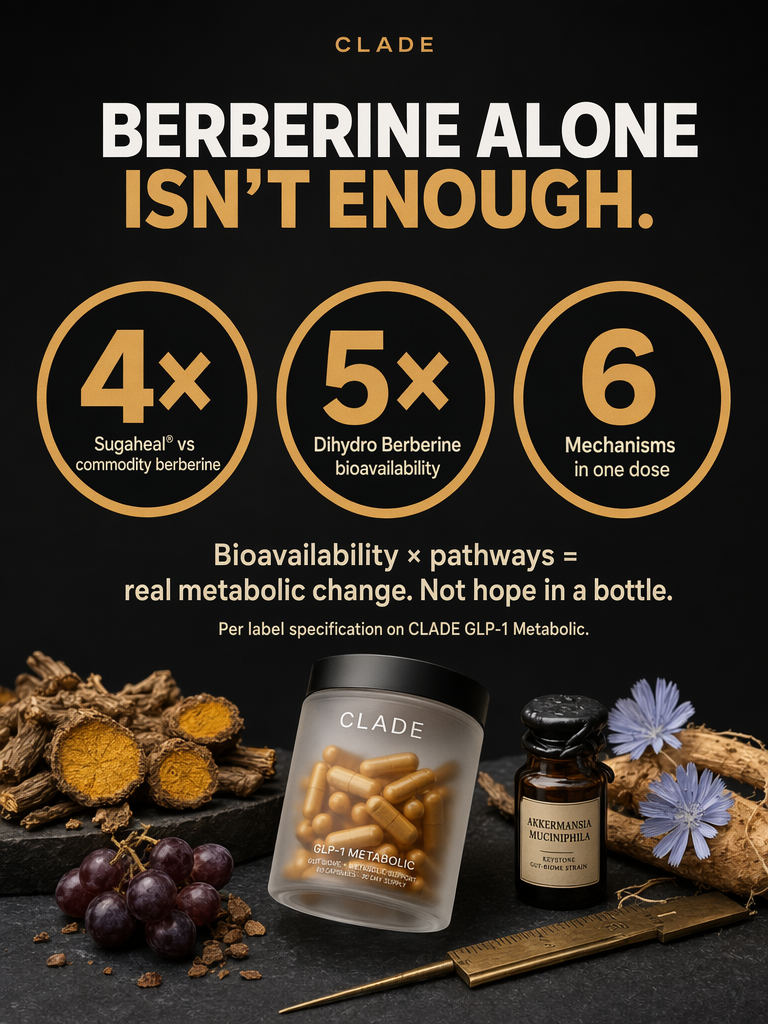
Berberine activates an enzyme called AMPK. AMPK helps your cells take up glucose more efficiently. That's real. There are 14 randomized controlled trials showing berberine supports healthy glucose metabolism.

But berberine doesn't directly stimulate GLP-1 production. It doesn't communicate with your intestinal L-cells. It works on a different metabolic pathway entirely.

Myth vs Reality
Myth

Berberine is "nature's Ozempic" and directly boosts GLP-1 production like semaglutide does.

Reality

Berberine activates AMPK for glucose uptake. It does not communicate with GLP-1-producing L-cells. Different pathway entirely.

Myth

A $14 bottle of commodity berberine gives you the same benefits as a clinical-grade formula.

Reality

Commodity berberine has roughly 0.36% oral bioavailability. Standardization, extraction method, and dose vary wildly.

Calling berberine "nature's Ozempic" is like calling a bicycle "nature's helicopter" because both involve travel.

This matters because if you bought a $14 bottle of commodity berberine on Amazon, took it for six weeks, and saw nothing change, the problem wasn't that supplements don't work. The problem was that you were given the wrong supplement for the wrong mechanism at an uncertain dose.

Berberine isn't useless. It's one piece. But it's being sold as the whole puzzle.

Key Takeaway

Berberine supports glucose metabolism through AMPK, but it doesn't stimulate GLP-1 production. Single-ingredient, single-pathway supplements are incomplete.

4

The Gut-GLP-1 Axis: Three Pathways That Actually Matter

If you want to know how to increase GLP-1 naturally, you need to understand the three pathways involved. This isn't marketing language. This is how the biology works.

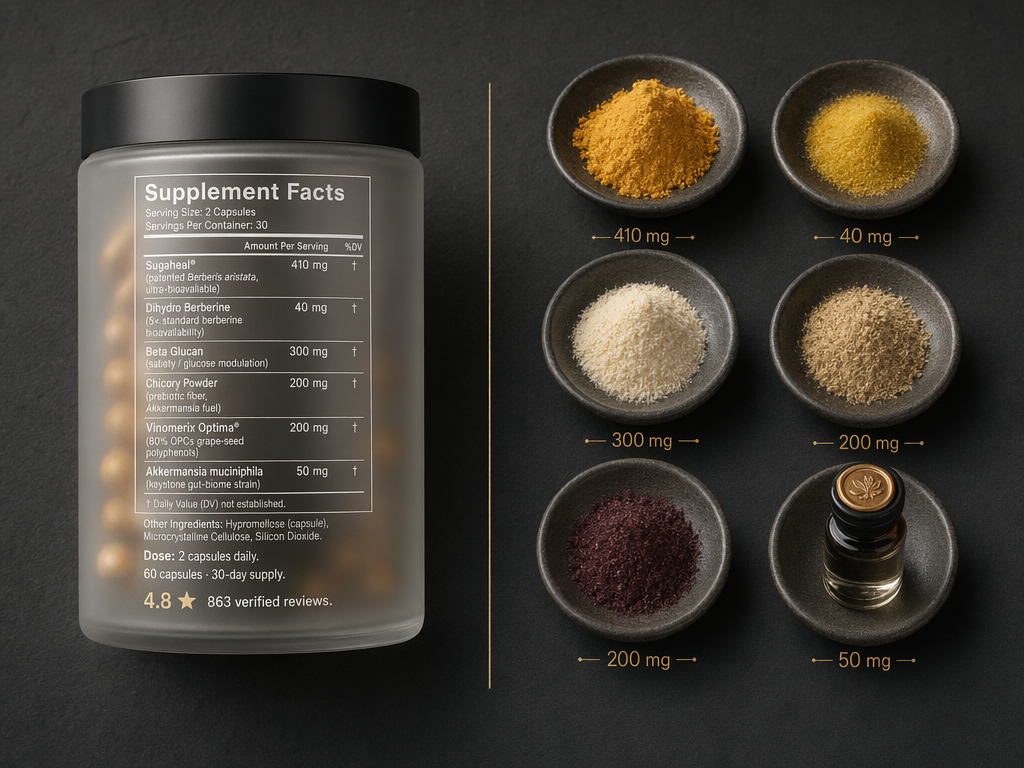
CLADE Protocol botanical ingredients laid out on natural surface, including Sugaheal, grape seed extract, chicory, and Akkermansia muciniphila
The six active ingredients behind CLADE's three-pathway formula
Pathway 1
Glucose Metabolism Support

Before you think about GLP-1 production, your cells need to be handling glucose efficiently. This is where patented extracts like Sugaheal (410mg in CLADE's formula) come in. Sugaheal has been clinically studied for HbA1c reduction and glucose metabolism at this exact dose. Sugaheal supports glucose metabolism through a separate metabolic pathway, without the GI issues associated with high-dose standalone berberine. It's a standardized extract, studied at the dose that showed results.

Pathway 2
GLP-1 Signaling via the Microbiome

A specific gut bacterium called Akkermansia muciniphila lives in the mucus lining of your intestines, right next to the L-cells that produce GLP-1. Published research shows that Akkermansia communicates with these L-cells and supports their signaling function. Think of it this way: the L-cells are the factory. Akkermansia is the foreman making sure the factory runs on schedule. Most GLP-1 supplements ignore this pathway entirely.

Pathway 3
Prebiotic Fuel for Bacterial Colonization

Here's what almost nobody talks about: Akkermansia needs food. Specifically, it needs prebiotic substrates that support its colonization in the gut lining. This is where Standardized Vinomerix Optima® (a standardized grape seed extract with 80% OPCs), chicory powder, and Beta Glucan come in. Published research (PMC9834079) shows that grape seed polyphenols promote Akkermansia growth. Chicory acts as a substrate for Akkermansia to establish and maintain populations in your gut, with Beta Glucan feeding beneficial gut bacteria alongside it. Without the fuel system, supplementing Akkermansia alone is like hiring a foreman but not giving him materials.

Why This Matters

Most "GLP-1 support" supplements target one pathway. Usually glucose metabolism. Sometimes microbiome. Almost never the prebiotic fuel system. The three-pathway approach is what makes the difference between taking a single ingredient and supporting an actual metabolic system.

See the Three-Pathway Formula

Every ingredient. Every dose. Every study reference. On the label.

View the Full Formula
No obligation. See the complete formula and pricing.
5

What to Look for in a GLP-1 Support Supplement

If you're evaluating options, here are five criteria that separate evidence-based formulas from marketing exercises.

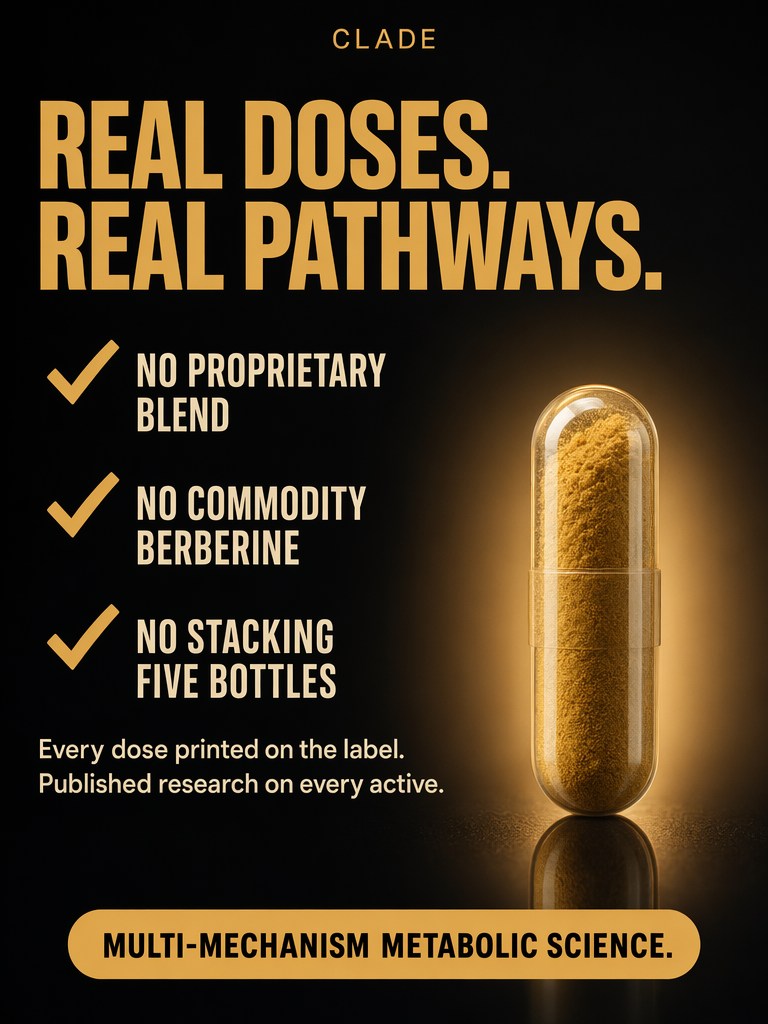
  1. Full dose disclosure. If the label says "proprietary blend" with a combined weight and no individual doses, you can't verify anything. Walk away.
  2. Patented or standardized ingredients. Commodity powders vary batch to batch. Patented extracts like Sugaheal and standardized extracts like Vinomerix Optima are made to specific active compound levels and studied at specific doses.
  3. Multi-pathway support. A single-ingredient formula targeting one metabolic pathway is incomplete. Look for formulas that address glucose metabolism, GLP-1 signaling, and the microbiome environment that makes signaling possible.
  4. Clinically studied doses. "Contains berberine" means nothing without dose context. Was it studied at 100mg or 1,500mg? Does the product match the study dose?
  5. Third-party testing. Heavy metals, purity, and potency verified by an independent lab. Not self-certified. Not "tested in-house." Independent.
6

How CLADE's Formula Maps to the Research

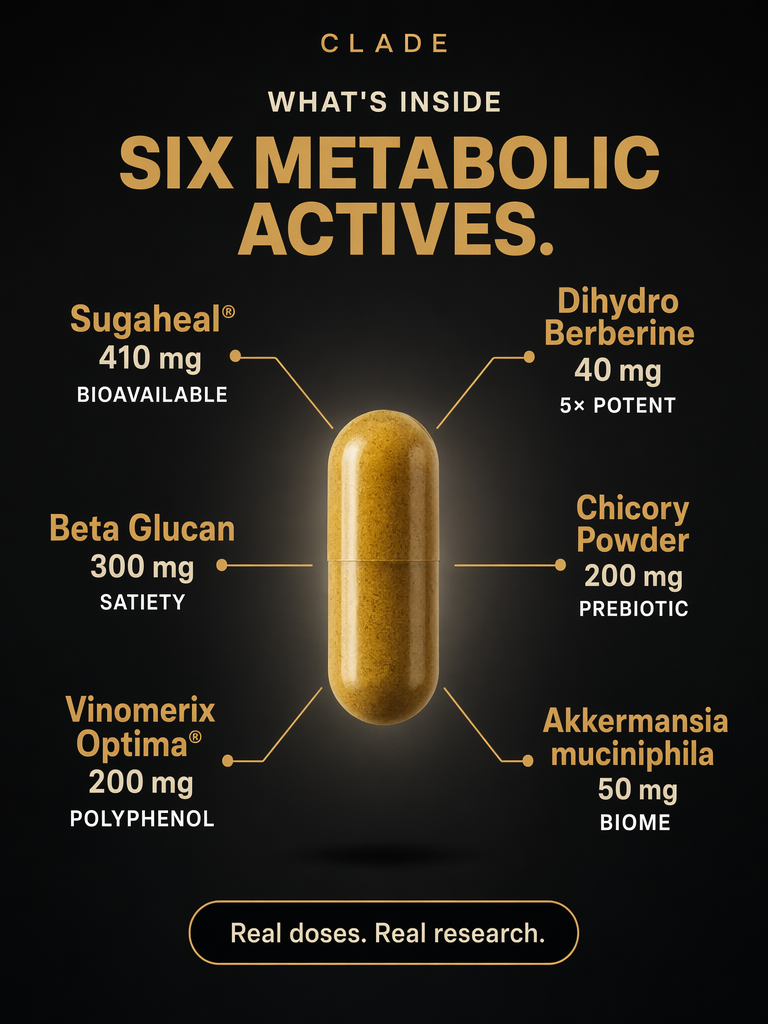
CLADE GLP-1 Metabolic Support was built around these three pathways. Here's what's in the formula and why each ingredient is there at that specific dose.

CLADE GLP-1 Metabolic Support bottle with 1,150mg active formula and full dose disclosure on label
Every dose printed on the label. Every ingredient verifiable against published research.

"As a nurse practitioner, I can look up the studies myself and verify the reasoning behind every dose. That's rare."

Karen S., NP, age 44
Ingredient Dose Pathway Why This Dose
Sugaheal® 410mg Glucose metabolism Patented extract, clinically studied for HbA1c reduction at this dose
Beta Glucan 300mg Glucose + gut health Soluble fiber supporting healthy glucose response and feeding beneficial gut bacteria
Chicory Powder 200mg Prebiotic fuel Substrate for Akkermansia to establish and maintain populations in your gut
Dihydro Berberine 20mg AMPK activation More bioavailable berberine form; small supporting dose avoids GI issues of standalone 500mg+ berberine
Standardized Vinomerix Optima® 200mg Akkermansia growth 80% OPCs, promotes colonization (PMC9834079)
Akkermansia muciniphila 20mg GLP-1 signaling Keystone probiotic for L-cell communication
CLADE GLP-1 Metabolic Support supplement facts panel showing 1,150mg total across six ingredients with exact doses

Notice something about this formula: Dihydro Berberine is included at 20mg as a supporting player, not a headliner. This is the more bioavailable berberine form at a small supporting dose, enough to contribute to AMPK activation without the GI issues of standalone 500mg+ berberine. The GLP-1 signaling pathway runs through Akkermansia and its prebiotic fuel system.

This is what "Know What You Take" means in practice. Not just seeing the doses, but understanding why each one is there.

7

The Price Conversation

Let's put the numbers side by side.

Prescription GLP-1 Drugs
$33+
per day without insurance
  • Requires a prescription
  • Nausea, gastroparesis, muscle loss
  • Requires lifelong use
  • Ongoing drug shortages
90-DAY PLAN
CLADE GLP-1 Metabolic Support
$1.30
per day on 90-day plan
  • Six ingredients, three pathways
  • Patented Sugaheal + Standardized Vinomerix Optima®
  • Full dose disclosure
  • Third-party tested
  • 90-day money-back guarantee
Daily dose comparison: Prescription GLP-1 drugs $33+/day vs CLADE GLP-1 Metabolic Support $1.30/day

This isn't a replacement for prescription drugs. If your doctor has recommended semaglutide or tirzepatide, have that conversation with them. CLADE is for people who want to support their body's natural metabolic signaling with evidence-based nutrition before, alongside, or instead of pharmaceutical intervention.

At $1.30 per day, the financial risk is minimal. The 90-day guarantee eliminates even that.

8

What Real Customers Report

Verified reviews from CLADE customers. Selected because they represent the specific outcomes people ask about most.

★★★★★

"Two months on CLADE, my A1C dropped a full point. My endocrinologist looked at the Sugaheal dose and said it matched the clinical research she'd reviewed."

★★★★★

"As a nurse practitioner, I'm skeptical of supplements by default. What changed my mind: I can look up the studies myself and verify the reasoning behind every dose. That's rare."

★★★★★

"By week three, I stopped reaching for something sweet after every meal. I didn't white-knuckle it. The cravings just... quieted."

★★★★★

"After three months, my doctor and I are discussing reducing my metformin dose. He approved me continuing CLADE alongside it."

★★★★★

"Five months in now. My fasting glucose has been consistently in range for the first time in three years. I check it every morning and the number doesn't spike my anxiety anymore."

These results are individual. They're not promises. What they share: specific, measurable outcomes tracked over weeks and months.

9

What to Expect (and When)

Metabolic change doesn't happen in a weekend. Here's a realistic timeline based on the ingredient research and customer reports.

Weeks 1-2

Digestive stabilization

Your gut is adjusting to the prebiotic fuel system and Akkermansia. Some people notice reduced bloating and slightly fewer cravings. Others feel nothing yet. Both are normal.

Weeks 3-4

Energy steadies, appetite normalizes

The afternoon crash softens. Appetite normalizes, meaning you feel hungry when you should and satisfied when you eat. Danielle's craving reduction at week three is typical of this window.

Weeks 6-8

Metabolic markers may start trending

Fasting glucose, postprandial glucose, HbA1c. This is where Patricia's full-point A1C improvement began showing up.

Month 3+

Sustained metabolic balance

The microbiome has had time to establish Akkermansia colonization. Christine's consistent fasting glucose readings reflect this longer adaptation.

This Isn't for Everyone

If you want results in 48 hours, this isn't the right product. CLADE is built for people who understand that metabolic systems take time to recalibrate and are willing to give the science room to work. We'd rather set honest expectations and keep customers for a year than overpromise and lose you in a month.

863 Verified Reviews. $1.30/Day. 90-Day Guarantee.

Now that you understand how the three-pathway system works and why 863 customers trust it, here's how to see if it's right for you.

Choose Your Plan
Free shipping on subscriptions. Cancel anytime.
10

Frequently Asked Questions

No. CLADE is a dietary supplement that supports your body's natural metabolic pathways. GLP-1 drugs inject a synthetic agonist that directly activates GLP-1 receptors. These are fundamentally different mechanisms for different situations. If your doctor has recommended a GLP-1 drug, discuss supplementation as a complementary approach, not a substitute.

Berberine has 14 randomized controlled trials showing metabolic benefits. Doctors increasingly discuss it. The challenge: commodity berberine varies wildly in quality and bioavailability. Patented extracts like Sugaheal standardize what matters. Karen S., a nurse practitioner, specifically cited CLADE's dose transparency as what changed her mind about supplementation.

Because commodity berberine is a single-pathway ingredient at an uncertain dose. CLADE's 1,150mg formula targets three metabolic pathways with patented Sugaheal and Standardized Vinomerix Optima® at clinically studied doses. You're comparing a flashlight to a headlight system. And the $39/month 90-day plan brings the per-day cost to $1.30.

We agree with the debunking. No supplement is "nature's Ozempic." That's a marketing claim, not a mechanism. What IS real: Akkermansia muciniphila communicates with GLP-1-producing L-cells. That's published biology, not berberine hype. CLADE doesn't claim to replicate what semaglutide does. It supports your body's existing signaling system through a different, complementary pathway.

CLADE is a dietary supplement. Always consult your healthcare provider before combining any supplement with prescription medications. Multiple CLADE customers (including Michael T.) report taking it alongside medication under their doctor's supervision.

The 90-day money-back guarantee on quarterly plans means you have three full months to evaluate the formula. If you don't see results you're satisfied with, you get a full refund. No questions. No hassle.

Every ingredient and its exact dose is printed on the label. Search the ingredient name and dose on PubMed or Google Scholar. For Vinomerix Optima specifically, reference PMC9834079 for the Akkermansia growth study. This is what "Know What You Take" means: the information is public and verifiable.

11

The Honest Summary

Here's what we've covered:

Your body already produces GLP-1 through intestinal L-cells. That's biology, not marketing. Supporting that production involves three metabolic pathways: glucose metabolism, GLP-1 signaling via the microbiome, and the prebiotic fuel system that makes bacterial colonization possible.

No supplement replaces what a GLP-1 drug does. But if you're looking for evidence-based nutritional support for your metabolic health, at a price that doesn't require insurance approval, with doses you can verify against published research, CLADE GLP-1 Metabolic Support was built for exactly that purpose.

1,150mg
Six ingredients. Three pathways. Patented Sugaheal + Standardized Vinomerix Optima®. $1.30/day.
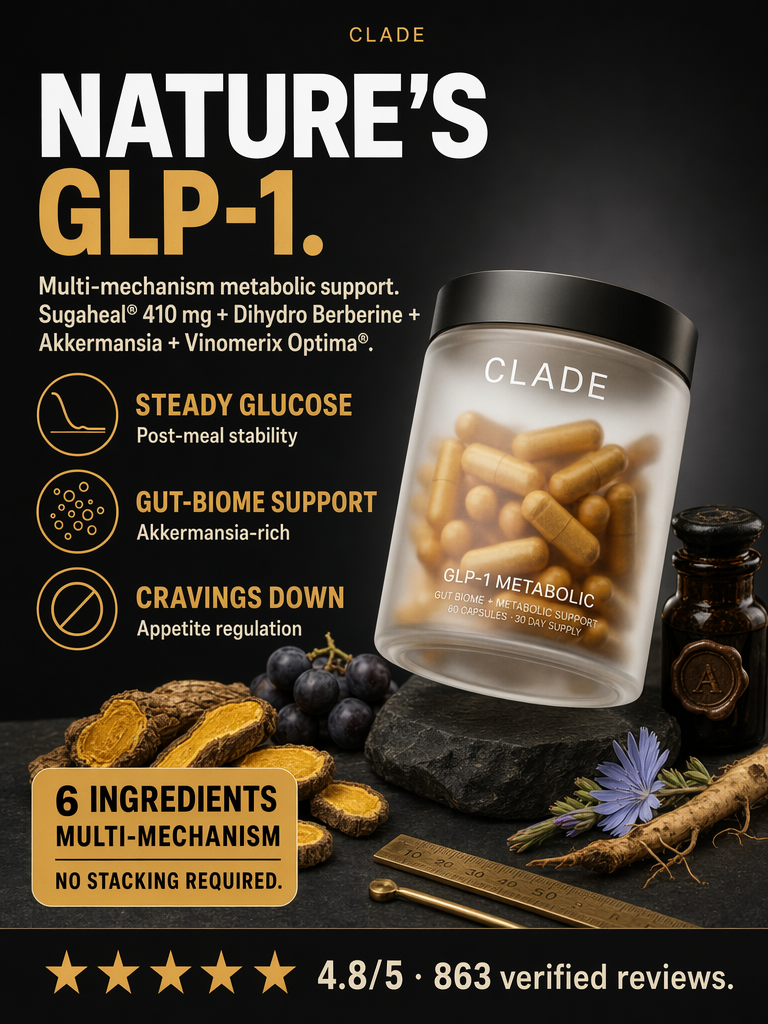
CLADE GLP-1 Metabolic Support bottle with three-pathway benefits highlighted

You've done the research. You've read the studies. You know what you're looking for.

Now you know what you're taking.

The CLADE Protocol Promise

We built this formula on published research, patented ingredients, and full dose transparency. If after 90 days you're not satisfied with the results, we'll refund every penny. No questions asked. No fine print. You keep the remaining supply.

  • 90-Day Risk-Free Trial
  • Full Refund, No Questions
  • Every Dose Verifiable

See the Full Formula and Choose Your Plan

1,150mg. Six ingredients. Three pathways. $1.30/day. 90-day guarantee.

View Plans and Pricing
90-day money-back guarantee on quarterly plans.
CLADE GLP-1 Metabolic · $1.30/day
See the Formula