Research Analysis

Researchers Spent a Decade Studying Gut Bacteria. One Strain Kept Showing Up in Every GLP-1 Paper.

It is not Lactobacillus. It is not Bifidobacterium. And it is probably not in your current probiotic.

By CLADE Research Team Published April 6, 2026 8 min read
4.8 from 863 Verified Reviews
90-Day Money-Back Guarantee
Third-Party Tested
Full Dose Disclosure

For the past ten years, microbiome researchers have been mapping which gut bacteria actually influence metabolic health. Not general "digestive wellness." Specific, measurable metabolic markers: fasting glucose, HbA1c, appetite regulation.

One species kept surfacing in study after study. Not Lactobacillus. Not Bifidobacterium. A lesser-known bacterium called Akkermansia muciniphila.

The problem? It makes up just 1-5% of a healthy person's gut flora. In people with metabolic concerns, that number drops even lower. And it is not in your standard probiotic.
About this article

This analysis draws from published peer-reviewed research, including the grape seed polyphenol-Akkermansia synergy study (PMC9834079), clinical data on glucose metabolism compounds, and verified buyer reports from 863 users of a commercial Akkermansia supplement. We cite specific studies, name exact doses, and distinguish between established findings and emerging evidence.

Your Probiotic Probably Ignores the One Bacterium That Matters for Metabolism

There are over 500 probiotic supplements on the U.S. market. The vast majority contain some combination of Lactobacillus and Bifidobacterium strains. These are well-studied for digestive comfort. They can help with bloating, regularity, and general gut health.

What they do not do is communicate with the intestinal L-cells that produce GLP-1.

GLP-1 is the peptide hormone that regulates blood sugar response, appetite signaling, and metabolic rate. When pharmaceutical companies developed GLP-1 receptor agonists, they targeted this pathway with synthetic drugs. But your body already has cells designed to produce GLP-1 naturally. They just need the right bacterial signal.

That signal comes from Akkermansia muciniphila. And the supplement you are currently taking almost certainly does not contain it.

Why Berberine Alone Falls Short

If you have searched for natural GLP-1 support, you have encountered berberine. Dozens of supplements market it as "nature's Ozempic." Some of that enthusiasm has a basis in research. Berberine does activate AMPK, an enzyme involved in glucose metabolism.

But berberine works through one pathway. It does not address the gut-hormone signaling axis. It does not support the microbiome infrastructure that enables your body to produce GLP-1 on its own.

The gap is not berberine itself. The gap is the missing piece: the bacterial population responsible for telling your L-cells to produce GLP-1 in the first place.

The Akkermansia-GLP-1 Connection

Akkermansia muciniphila lives in the mucus layer lining your intestines. When its population is healthy, it communicates with intestinal L-cells through specific protein families. That communication triggers GLP-1 production.

This is not a theoretical mechanism. Researchers have mapped the signaling pathway. The question was never whether Akkermansia influences GLP-1. The question was whether you could supplement it effectively and whether it would colonize.

The answer, published in a study indexed as PMC9834079, pointed to an unexpected ally: grape seed oligomeric proanthocyanidins (OPCs). Specific polyphenols that promote Akkermansia growth in the gut. Feed the bacterium, and it stays. Starve it, and supplementation becomes a revolving door.

Botanical compounds used in CLADE research
Published research identified the polyphenol-Akkermansia synergy (PMC9834079)

The Prebiotic Fuel System: Why Akkermansia Alone Is Not Enough

Here is where most Akkermansia supplements fail. They deliver the bacterium without the infrastructure to support it.

Pendulum, the most recognized name in Akkermansia supplementation, sells the strain alone at $55-65 per month. It is a legitimate product. But delivering Akkermansia without prebiotic fuel is like planting seeds on concrete.

The Prebiotic Fuel System pairs three components:

The Seed

Akkermansia muciniphila

20mg

Communicates with L-cells to support GLP-1 signaling.

The Fertilizer

Vinomerix Optima® (80% OPCs)

200mg · Standardized

Published research (PMC9834079) demonstrated that these specific polyphenols promote Akkermansia growth.

The Soil

Chicory + Beta Glucan

200mg + 300mg

Chicory acts as a substrate for Akkermansia to establish and maintain populations in your gut, with Beta Glucan feeding beneficial gut bacteria alongside it.

Raw botanical ingredients used in CLADE GLP-1 Metabolic Support
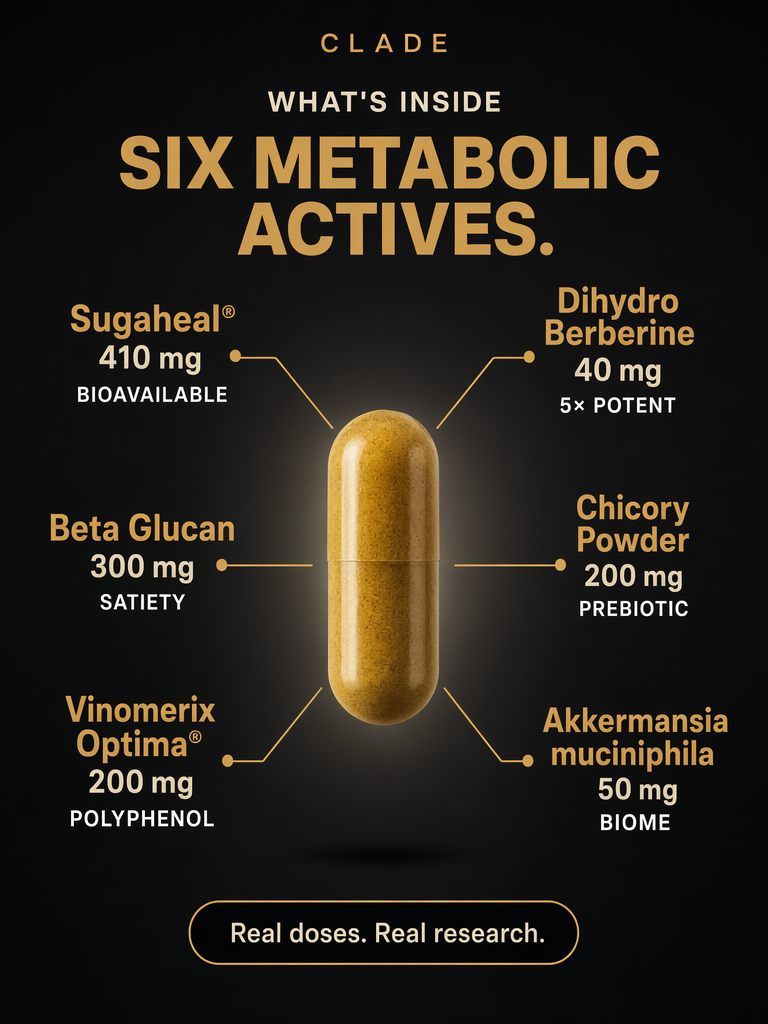
Six active compounds sourced from published research -- Akkermansia, Standardized Vinomerix Optima®, Sugaheal, Dihydro Berberine, Chicory, Beta Glucan

Three components creating a self-sustaining loop: plant, feed, fuel. No competitor pairs all three. That is not marketing language. You can verify it by reading their labels.

"CLADE lists Akkermansia and Vinomerix at specific doses I can verify against research."

-- Karen S., NP, 44, Verified Buyer

What the Research Shows (and What It Does Not)

Let us be specific about what is established and what is still emerging.

Established

Akkermansia muciniphila is a keystone gut bacterium associated with metabolic health markers in published human cohort studies. Its abundance correlates with healthier glucose metabolism, lower inflammation markers, and improved gut barrier function.

Established

Grape seed OPCs promote Akkermansia abundance. PMC9834079 documented this synergy.

Established

Sugaheal, the patented botanical extract dosed at 410mg in CLADE, has been clinically studied for HbA1c reduction and glucose metabolism. Sugaheal supports glucose metabolism through a separate metabolic pathway, without the GI issues associated with high-dose standalone berberine.

Emerging

The direct causal chain from Akkermansia supplementation to GLP-1 upregulation in humans is supported by mechanistic research but not yet proven in large-scale randomized controlled trials.

CLADE does not claim to treat diabetes or replace prescribed medication. What it does claim, and what 863 verified buyers have reported, is measurable support for metabolic markers when combined with existing care.

CLADE GLP-1 Metabolic Support: 1,150mg Active Compounds, 3 Metabolic Pathways

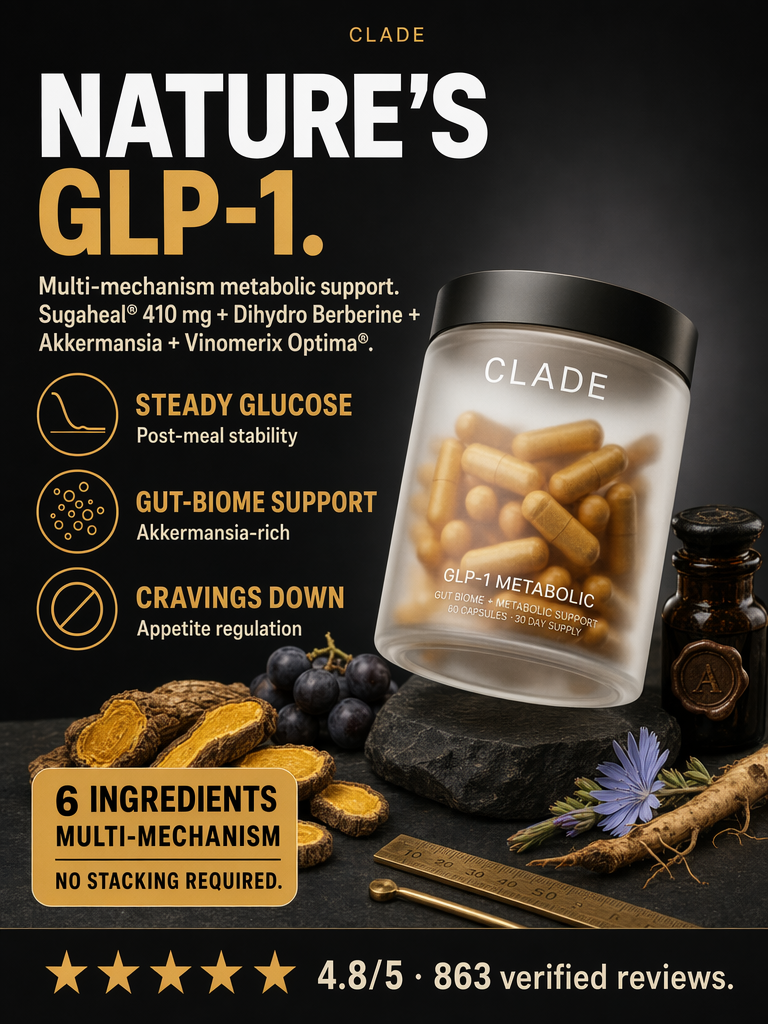
CLADE GLP-1 Metabolic Support supplement bottle
CLADE GLP-1 Metabolic Support -- 60 capsules per bottle
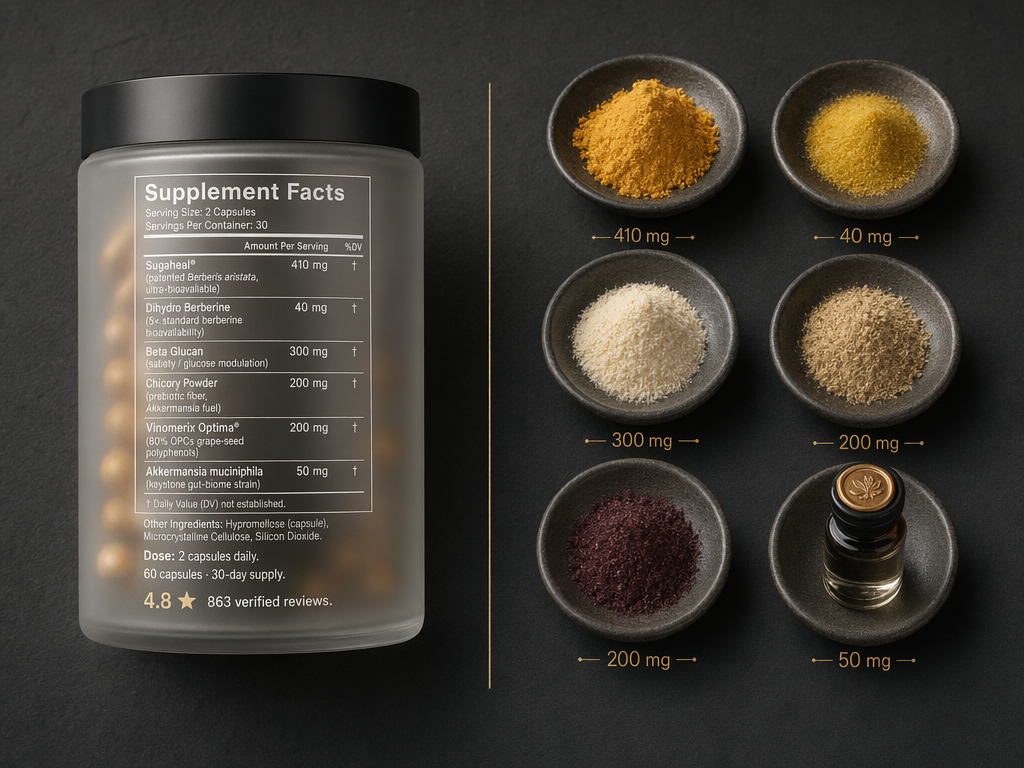
Supplement Facts panel showing all ingredient doses
Full dose disclosure -- every ingredient and dose printed on the label

CLADE built a supplement around this research. Six ingredients. Three metabolic pathways. 1,150mg of active compounds per serving, every dose printed on the label.

Pathway 1: Glucose Metabolism

Sugaheal + Dihydro Berberine

410mg + 20mg

Pathway 2: Gut-GLP-1 Signaling

Akkermansia muciniphila

20mg

Pathway 3: Microbiome Infrastructure

Standardized Vinomerix Optima® + Chicory + Beta Glucan

200mg + 200mg + 300mg

Two capsules daily with your largest meal. 60 capsules per bottle. $49/month on subscription, $39/month on the quarterly plan.

The label shows everything. No proprietary blends. No "other ingredients" that take up half the capsule. Rice flour and a plant-based shell. That is it.

See the Full Ingredient Panel and Verified Reviews

Check Current Availability

90-day money-back guarantee on all subscriptions

What 863 Verified Buyers Report

★★★★★

"Two months on CLADE, my A1C dropped a full point. My endocrinologist asked what changed. When I showed him the label, he said the Sugaheal dose matched clinical HbA1c research."

★★★★★

"By week three, I stopped reaching for something sweet after every meal. The afternoon energy crash was gone by month two."

★★★★★

"Five months in and my fasting glucose has been consistently in range for the first time in three years."

★★★★★

"After three months of consistent use, we're discussing reducing my metformin dose."

These are individual results. Your experience may differ. CLADE is a dietary supplement, not a medication.

Why Most Supplement Companies Skip Akkermansia

Standardized and patented extracts cost more than commodity powders. Standardized Vinomerix Optima® costs more than generic grape seed. Sugaheal costs more than bulk berberine.

The math is simple: lower ingredient cost means higher margins. That is why most "GLP-1 support" supplements are repackaged berberine at unclear doses inside proprietary blends.

CLADE chose the harder path. Patented Sugaheal paired with Standardized Vinomerix Optima®. Full dose disclosure. Every number on the label verifiable against the published study it came from. That decision makes the product more expensive to produce. It also makes it honest.

Availability and Pricing

CLADE GLP-1 Metabolic Support is available directly at cladeprotocol.com.

Monthly Plan

$49

/month

Billed every 4 weeks

$1.63/day

One-Time

$59

per bottle

No commitment

$1.97/day

All subscription plans include free US shipping and a 90-day money-back guarantee. One-time purchases carry a 30-day guarantee. No restocking fees. No complicated forms. If your metabolic markers do not improve, you get every dollar back.

"Switching to CLADE, the combination made a noticeable difference within a month."

-- Jennifer A., 42, Verified Buyer

How CLADE Compares

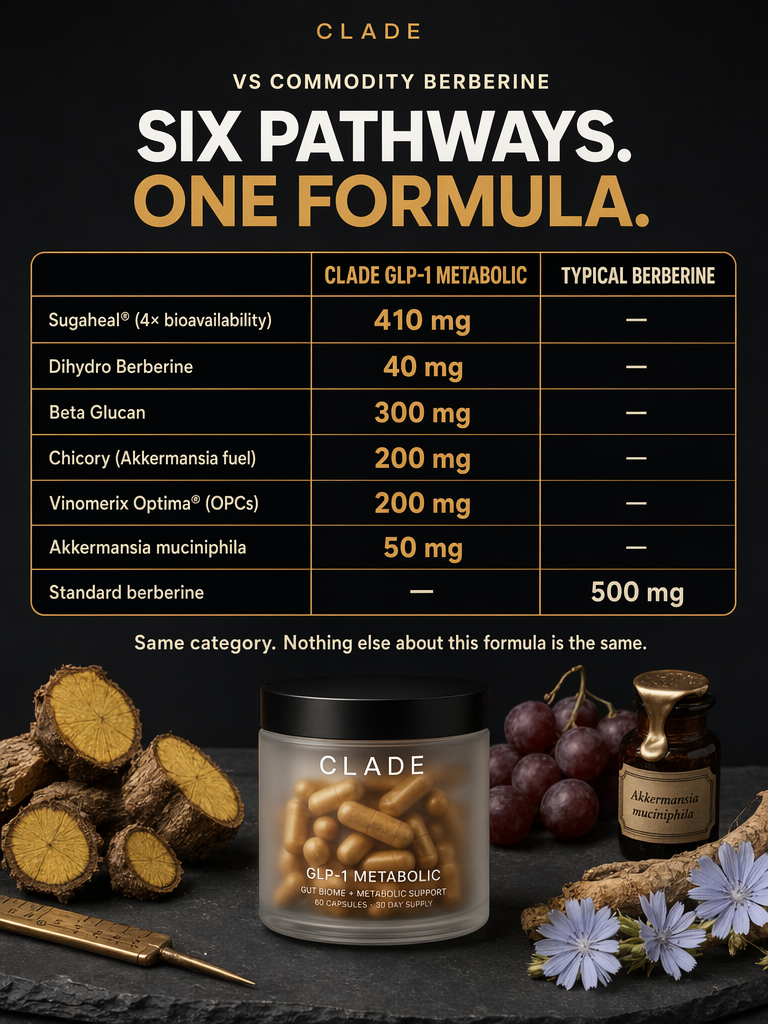
CLADE GLP-1 multi-pathway mechanism vs single-pathway supplements
Three metabolic pathways working together -- not a single ingredient in isolation
Feature
CLADE
Others
Every ingredient dose disclosed
Patented Sugaheal (not generic berberine)
Akkermansia muciniphila included
Rare
Prebiotic fuel for Akkermansia
Multi-pathway GLP-1 support
3 pathways
1 pathway
Doses match clinical research
Exact
Unknown
90-day money-back guarantee
30 days typical
The CLADE Promise

Try CLADE GLP-1 Metabolic Support for 90 days. If your metabolic markers do not improve, contact us for a full refund. No forms, no restocking fees, no questions. We cover return shipping. 863 buyers rated it 4.8 stars. We are confident you will too.

Full refund, no questions asked
Instant refund processing
Company covers return shipping
No restocking fees or forms

See Current Pricing and Full Ingredient Panel

Check Current Availability

Free shipping on subscriptions · Cancel anytime

Questions Informed Buyers Ask First

Berberine activates AMPK for glucose metabolism, one pathway. CLADE adds two more: Akkermansia for gut-based GLP-1 signaling and a prebiotic fuel system (Vinomerix + Chicory) to sustain bacterial colonization. Three pathways instead of one, with published research behind the synergy.

Akkermansia is dosed as a probiotic (colony-forming units), not by raw weight. Weight-based comparisons do not apply to probiotic strains the way they apply to botanical extracts, which is why the strain sits at 20mg alongside 500mg of prebiotic substrate (Chicory 200mg plus Beta Glucan 300mg) that helps it colonize.

CLADE is a dietary supplement, not a medication. Because it supports glucose metabolism, you should consult your healthcare provider before combining it with diabetes medications. Several verified buyers report their doctors reviewed the label and approved concurrent use.

Pendulum sells Akkermansia alone at $55-65/month. CLADE pairs Akkermansia with Standardized Vinomerix Optima® (published synergy for Akkermansia growth, PMC9834079) and Chicory (prebiotic fuel that acts as a substrate for Akkermansia to establish and maintain populations in your gut), plus Sugaheal for glucose metabolism. Three pathways for $39-49/month vs one pathway for $55-65.

Digestive improvements and reduced cravings typically appear within 2-3 weeks. Energy stabilization by weeks 3-4. Measurable metabolic marker changes (fasting glucose, HbA1c) at 6-8 weeks. Full metabolic adaptation at 90 days. The 90-day guarantee covers the full adaptation period.

No. CLADE is not a GLP-1 agonist, prescription drug, or replacement for semaglutide or tirzepatide. It supports your body's existing GLP-1 production through nutritional pathways, specifically by supporting the gut bacteria that communicate with GLP-1-producing L-cells.

Your Gut Is Already Designed to Produce GLP-1. Give It the Right Signal.

You have read the research. You know why Akkermansia matters, why it needs prebiotic fuel, and why most supplements skip both. Now the question is whether to verify it for yourself.

Check Availability at CLADE Protocol
✓ Published research behind every ingredient ✓ Every dose on the label ✓ 863 verified buyers ✓ 90-day guarantee

*These statements have not been evaluated by the Food and Drug Administration. This product is not intended to diagnose, treat, cure, or prevent any disease. Consult your healthcare provider before starting any supplement regimen.

CLADE
Check Availability -- $39/mo
90-day guarantee
View Product